
🌱 Kitchen Gardening for Beginners in Pakistan: Complete Step-by-Step Guide
📑 In This Guide
Kitchen gardening is one of the most rewarding hobbies in Pakistan — fresh dhania, podina, tomatoes and palak straight from your courtyard, rooftop or even a sunny balcony. This guide takes you from zero to first harvest, step by step, using methods that work in our climate and with materials available in any Pakistani bazaar.
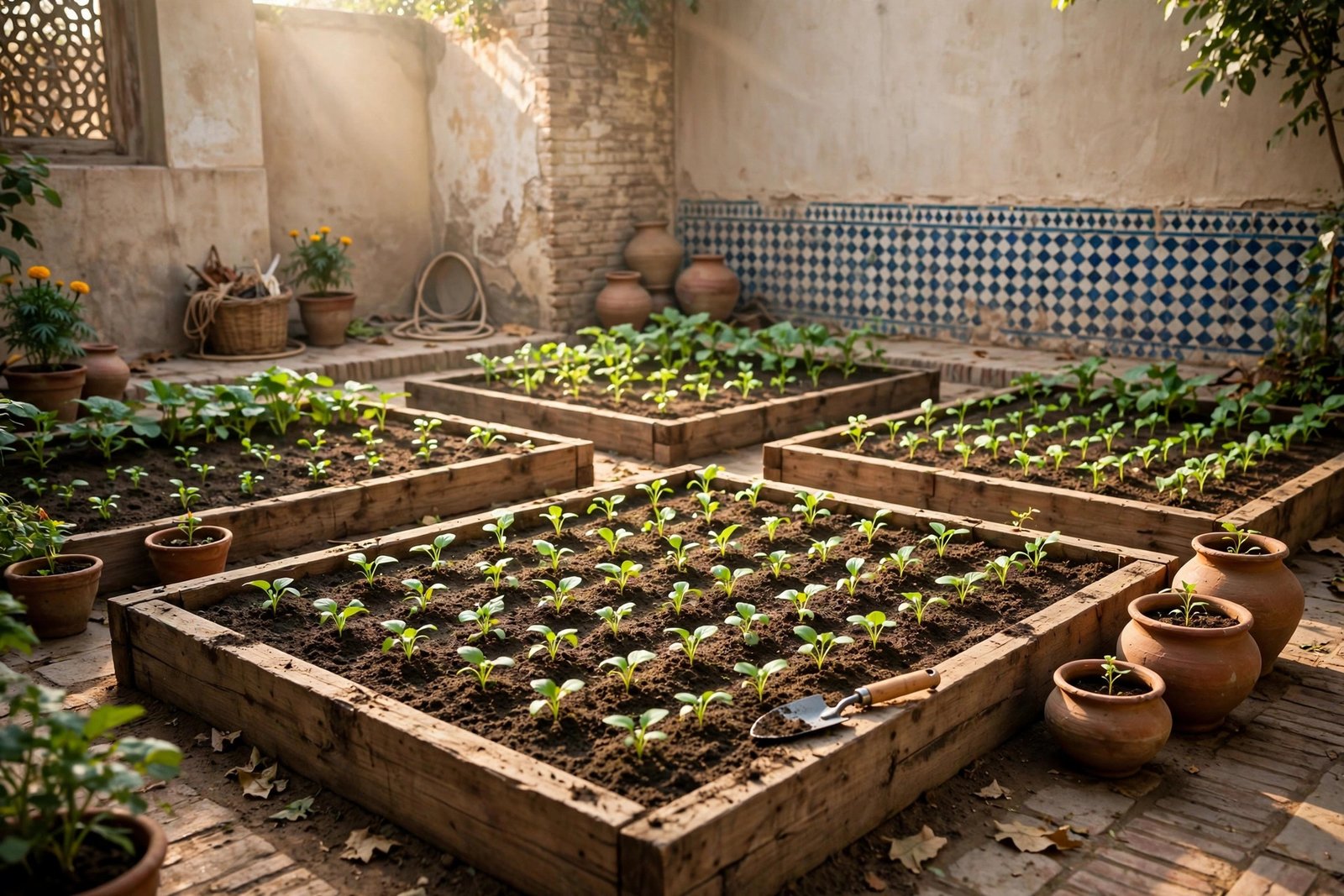
🛒 Step 1 — Gather Your Basic Materials
You do not need expensive equipment. Here is the complete starter kit:
- Containers or a plot: 12–14 inch gamlay (clay pots), grow bags, or a 4×8 ft sunny plot.
- Soil mix: 50% bhal (river silt) + 30% well-rotted gobar ki khaad (cow manure) + 20% sand. This mix drains well and feeds plants.
- Seeds: Buy from a trusted local seed store — desi seed shops in your city mandi are cheaper and fresher than imported packets.
- Watering can or pipe with a gentle shower rose — strong jets wash away seeds.
- Basic tools: a khurpa (hand trowel) and a pair of gloves.
☀️ Step 2 — Choose the Right Spot
Most vegetables need 5–6 hours of direct sunlight daily. In Punjab and Sindh, an east-facing spot is ideal — morning sun, afternoon shade in May–June heat. On rooftops, place pots where the parapet gives partial afternoon shade in peak summer.
🌰 Step 3 — Prepare the Soil (Most Important Step)
- Fill containers leaving 1 inch space at the top.
- Mix the soil, manure and sand thoroughly — break all lumps.
- Water the filled pots one day before sowing so the soil settles.
- For ground plots, dig 8–10 inches deep, mix in 2–3 inches of rotted manure, and level the bed.
🌿 Step 4 — Sow at the Right Time
Pakistan has two main growing seasons:
- Winter (Rabi): sow October–November — palak, methi, mooli, gajar, matar, dhania, phool gobhi.
- Summer (Kharif): sow February–March — bhindi, karela, kheera, baingan, mirch, tomato (transplant).
Sow seeds at a depth of roughly twice the seed's size, cover lightly with fine soil, and mist gently.
💧 Step 5 — Water Correctly
The #1 killer of beginner gardens is overwatering. Rules that work:
- Water early morning — leaves dry by noon, fewer fungal diseases.
- Check soil with your finger: if the top inch is dry, water; if moist, wait.
- In June heat, pots may need water twice daily; in winter, every 2–3 days is enough.
🐛 Step 6 — Protect Without Chemicals
Spray neem oil (2 tablespoons per litre of water + a few drops of dish soap) every 10–14 days to keep aphids and whitefly away. Hand-pick caterpillars in the evening. Marigold (genda) flowers planted at bed corners repel many pests naturally.
🧺 Step 7 — Harvest and Enjoy
Start harvesting leafy vegetables like palak and methi when leaves are 4–6 inches tall — pick outer leaves and let the centre keep growing ("cut and come again"). Most summer vegetables are ready 60–90 days after sowing.
❓ Frequently Asked Questions
How much space do I need to start?
Just 4–6 pots on a sunny balcony can grow dhania, podina, palak and mirch for a small family.
Is kitchen gardening expensive in Pakistan?
A starter setup of 6 clay pots, soil, manure and seeds costs roughly Rs. 1,500–2,500 — and one season's harvest easily covers it.
Can I garden on a rooftop in summer?
Yes — use light-coloured pots, mulch the soil surface with dry leaves or rice husk, and water early morning and late evening in June.
